
There is a particular kind of chaos that only exists in a room full of 14-year-olds holding pipettes.
Not the loud chaos, there is that too, but the structural kind. The kind where a lesson that made perfect sense at your desk, one which may have taken hours to develop, collapses in real time under the weight of attention spans, prior knowledge gaps, and the simple fact that concepts regarding diffusion have escaped the memories of half the class.
It turns out, this is not a teaching problem.
It’s a systems problem.
And more interestingly, it’s a systems design problem disguised as a human one.
The illusion of good content
Early on, I believed what most people believe: if the material is clear, the learning will follow.
If only.
Sure, you can deliver a clean, logically structured explanation of the cell membrane, a fluid mosaic of phospholipids, cholesterol, proteins. Yes, maybe you even did so with the confidence of an ivy league Ph.D. And despite all of this, you can also watch it decay from your student’s memory within days. Of course, it’s not because your explanation was poor, we are beyond that, but instead, because a single exposure is structurally insufficient.
Now, I’m no cognitive psychologist. In fact, I’m positive spell check corrected the word phycologist after I botched its spelling. But this man, Hermann Ebbinghaus, was a cognitive psychologist, and back in 1885 he chose to be bold and try a series of experiments that were thought impossible at the time. Hermann wanted to show that high order functions of the mind, like memory, learning, and forgetting, could be tested experimentally. Despite the pushback, Hermann executed his experiments and made some pretty impactful observations. Using himself as the single subject, Hermann demonstrated that learning and memory improve with repetition and conversely, that forgetting increases as time passes, particularly if there is no effort towards remembering (Ebbinghaus). Truthfully, an experiment with a single subject is not enough to draw any conclusions and his methods of memorizing and reciting syllables, sometimes as many as 15,000 syllables in an experiment, might have been a bit imprecise. Though, the wonderful thing about Mr. Ebbinghaus and his tests is that in the more than 100 years since, his conclusions, now called the Learning Curve and the Forgetting Curve, have been demonstrated hundreds of times by other scientists (Vagha et al.).
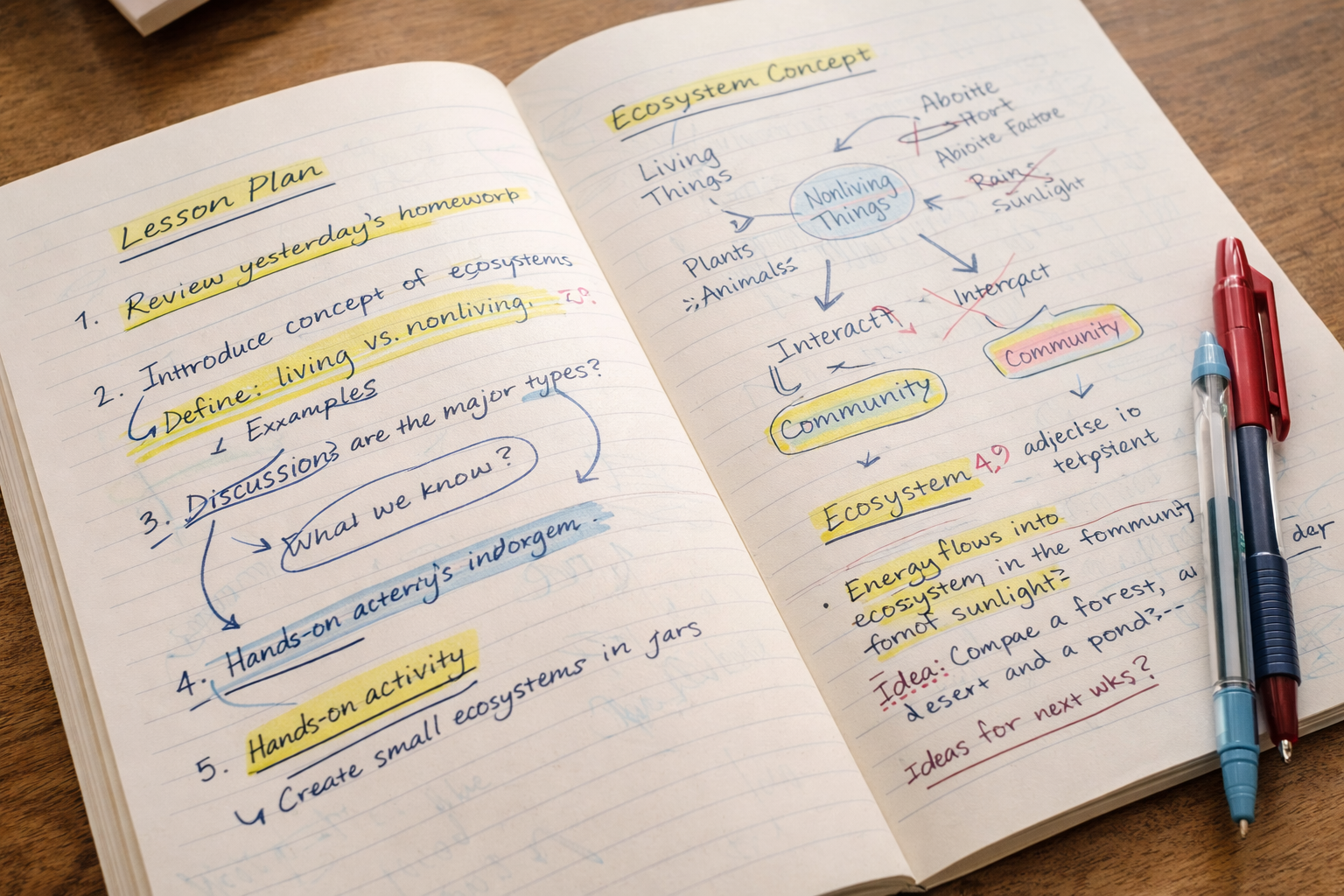
Honestly, this is so intuitive in today’s day and age, what is the point? The point is that memory is not stable after initial encoding and distributed practice, revisiting material over time, consistently outperforms single-session instruction for long-term retention.
Which reframes the issue of good content entirely
Content is not the system
Content is input.
The system is everything else: sequencing, spacing, retrieval, feedback timing, constraints, and incentives. These variables determine whether information stabilizes into usable knowledge or evaporates. Excellent content inside a poorly designed system will stymie the potential of your strongest learning outcomes. Why?
The system does not care how elegant your explanation was.
Constraints are not the enemy
A 45-minute class period is not enough time to do everything you want. A 75-minute class period is more than enough time to do something poorly.
Students forget. Students misinterpret. Students obsess over the grade, missing the lesson entirely. Some students may find that your class is simply their lesser strength. As were physics and math for me. None of this is surprising. It is expected behavior in a system with limited time, made of a sea of students diverse in background and understanding, and converging on a common volatile attention.
These are not failures. These are constraints.
And constraints are not limitations; they are the design space. To be seen as limiting is, well, limiting. If that upsets you, that’s probably natural, and may be tolerable. I dealt with it for years. But if you’re anything like me, this design space, constrained and made for pubescent flesh and bone, may wear on you and it’s worth listening to this nagging presence.
But I digress.
Once you accept that attention is finite, working memory is limited, and prior knowledge is inconsistent, the task shifts. Consider the cherubs; learning in four other unrelated classes with new concepts in each, laden with hormones and maybe their period for like, only the 10th time in their lives, fixated on the pimple on their face and the kid they have a crush on, and daunted by the fact that they have to go to practice today even though they are sore and their team hasn’t won a game this season. You see? You are no longer optimizing for clarity alone. You are designing under cognitive load, time scarcity, and noise.
At that point, a more useful question emerges:
If attention is finite and memory decays, what would you have to build so that learning becomes the default outcome?
That is a systems question, not a teaching trick.
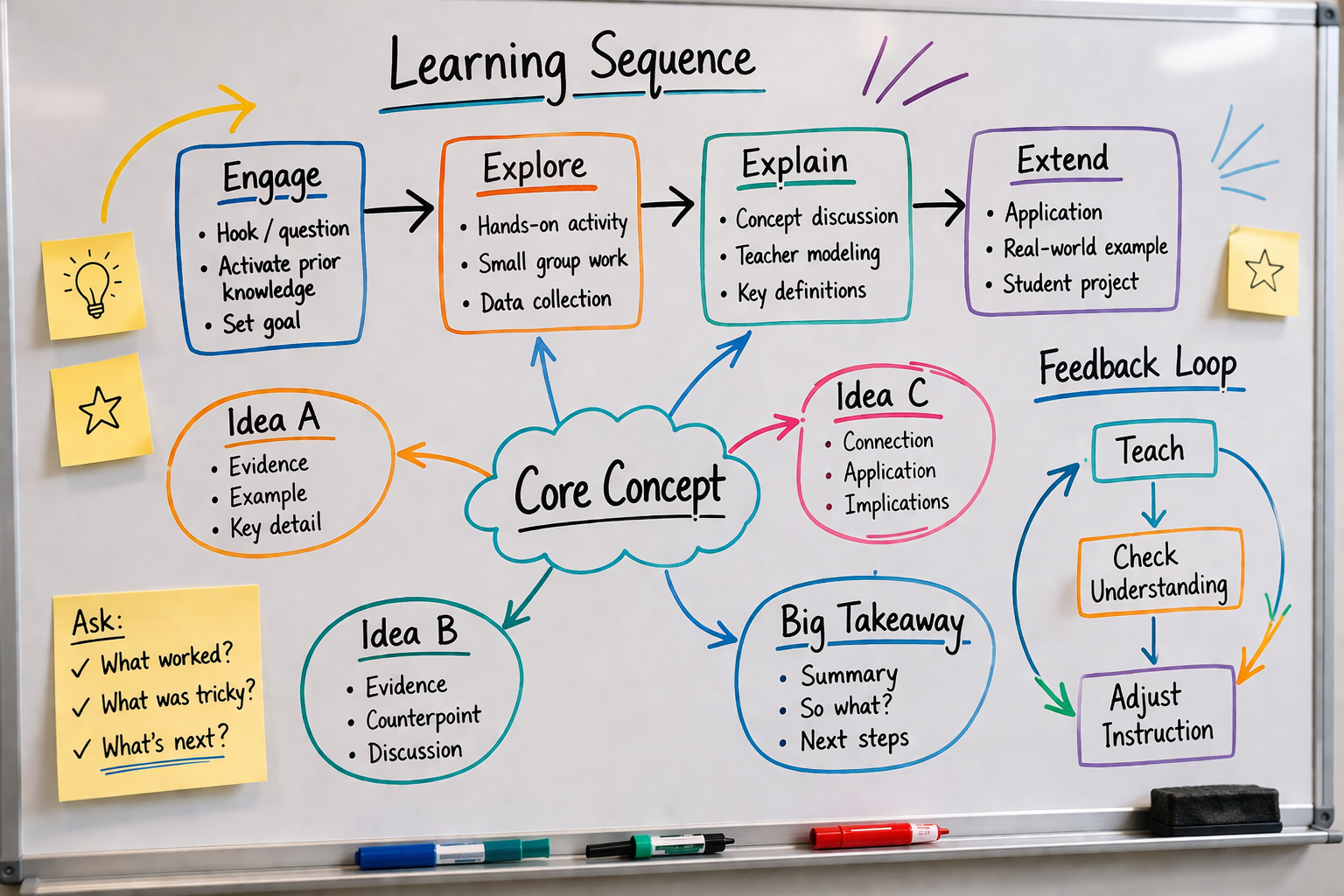
Feedback loops run the show
The most reliable failure mode in both classrooms and systems is poorly timed feedback.
If a student misunderstands something on Tuesday and you discover it on Friday, the system has already accumulated too much error. Especially considering their test on Monday. The signal arrived too late to be useful. So, the obvious move is to compress the loop.
More retrieval. More feedback.
Whiteboard checks. Think-pair-sharing. Exit tickets. Flipped classrooms. Fewer passive confirmations like “you guys got it?”, because that question primarily measures confidence, not understanding, right? This is not just intuition, if you find this intuitive. Remember our friend Hermann, who said we get better with experience and practice? Well others, such as our more modern cognitive scientist friends, Roediger & Karpicke have demonstrated, slightly more empirically, this same understanding. They showed that students who repeatedly retrieved information during study performed better on delayed tests than students who spent equivalent time re‑reading (Roediger and Karpicke). Many others have agreed with these conclusions and have even expanded on them. We now understand that retrieval practice promotes metacognitive awareness and creates a “beautiful struggle”, if you will, making later recall more effortful but more durable (Dunlosky et al.; “Retrieval Practice and Why It Works”; Witherby and Carpenter). Logically, this reduces anxiety in students in an exam setting(Cepeda et al.). And what teacher wouldn’t want that? So, retrieval practice is one of the more effective learning strategies in an educators toolbelt, to say the least. But there’s more. Student retrieval simply for the sake of remembering is horrendously unengaging and arguably not the point of teaching. And of course, in a more common sense, with student retrieval exercises comes feedback per the instructor. Now we get busy, you better believe as a faculty member at a boarding school I know busy, but timing matters. Particularly, when feedback is delayed too long or provided too often, both performance, engagement, and motivation degrade.
A recent study found that motivation declines markedly when feedback is delayed by more than about 10 days and that feedback should reach students while the memory of their work is still accessible (Fisher et al.). It’s intuitive to understand that immediate feedback suits simple error correction. It feels good as a learner to know what you’re doing and immediate feedback stimulates reward‑related neural circuitry in the brain. Interestingly, however, studies have also shown that delayed feedback engages the hippocampus and supports learning and recall (Delayed Feedback - an Overview | ScienceDirect Topics). In fact, delayed feedback, when used intentionally, is said to promote deeper processing and integration by forcing learners to retrieve and reflect before correction (Aljabri). Ultimately, it looks like another case of Goldie Locks and a reasonable order of operations is 1. Student retrieval 2. Quick corrective feedback (within seconds) and 3. delayed evaluative feedback (to encourage reflection).
We live, and are hurdling towards the future yet, the principle is not “instant everything.”
It is alignment.
Fast loops for error correction. Slightly delayed loops for reasoning and transfer.
In systems language: latency degrades performance, but timing must match function.
Sequencing is a hidden lever
One of the most counterintuitive realizations from teaching is that what you teach matters less than many people think, while when and how it appears matters much more. In a classroom setting for teachers, you may have heard this idea or perhaps it was danced around. It is not until your Tevas are in the classroom that the gravity of this understanding will really dawn on you.
Learning is not linear.
Students do not absorb a concept, store it, and move on. They encounter it, lose it, reconstruct it under pressure, confuse it with adjacent ideas, and gradually refine it through repeated exposure.
The structure is not:
teach → assess → move on
It is:
introduce → revisit → retrieve → apply → revisit → stress-test → revisit again
This is not stylistic preference; it reflects how memory consolidates. In the world of psychology and teaching research this structural approach is called interleaving. Interleaving involves mixing different problem types or topics within a study session rather than blocking similar items together. Mixed media. Videos. Essays. Case Studies. Group work. A presentation. On the same concept. Then applied to a mixed bag of all the concepts of the school year. Sounds terrifying to a child but depicts the depth of student content mastery wonderfully for the teacher.
The interesting thing about interleaving, despite it being another reasonable tool in the tool belt of educators, is that it takes time. In addition to the time requirements, a 2022 study by Sana & Yan tested interleaved versus blocked quizzes with 155 high‑school students. Students initially performed slightly worse on interleaved quizzes than on blocked quizzes, but on a delayed test one month later, interleaved practice led to higher retention (63 % correct) compared with blocked practice (54 %) or untested material (47 %) (Yan). What starts to become clear is that by juxtaposing problems from different concepts, students draw attention to the features that differentiate those concepts, ultimately leading to deeper conceptual learning.
So we see, spaced repetition strengthens retention. Retrieval practice strengthens recall more effectively than passive review. Interleaving topics, mixing related but distinct ideas, improves the ability to discriminate between concepts and apply them flexibly, even if it feels harder in the moment.
That last point matters.
Effective learning often feels worse.
Students tend to feel more confident after clear lectures, yet perform better after effortful, active engagement. This mismatch between perception and actual learning is one of the more persistent illusions in education.
So sequencing is not just logistics.
It is a primary control mechanism.
Closing thought
There is a temptation to treat teaching as a soft skill. I think that misses the point.
At its core, teaching is applied systems design with human variables and very little room for bluffing. The classroom tells you, quickly and often, whether your structure works.
And once you start seeing it that way, you stop trying to deliver better lessons as isolated performances. You start building systems that make learning more likely to emerge.
That, to me, is the interesting work.
Bibliography
Aljabri, Sameer. “Timing of Feedback and Retrieval Practice: A Laboratory Study with EFL Students.” Humanities and Social Sciences Communications, vol. 11, no. 1, Nov. 2024, p. 1458. www.nature.com, https://doi.org/10.1057/s41599-024-03983-6.
Cepeda, Nicholas J., et al. “Distributed Practice in Verbal Recall Tasks: A Review and Quantitative Synthesis.” Psychological Bulletin [US], vol. 132, no. 3, 2006, pp. 354–80. APA PsycNet, https://doi.org/10.1037/0033-2909.132.3.354. Delayed Feedback - an Overview | ScienceDirect Topics. https://www.sciencedirect.com/topics/psychology/delayed-feedback. Accessed 16 Apr. 2026.
Dunlosky, John, et al. “Improving Students’ Learning With Effective Learning Techniques: Promising Directions From Cognitive and Educational Psychology.” Psychological Science in the Public Interest, vol. 14, no. 1, Jan. 2013, pp. 4–58. DOI.org (Crossref), https://doi.org/10.1177/1529100612453266.
Ebbinghaus, Hermann. “Memory: A Contribution to Experimental Psychology.” Annals of Neurosciences [United States], vol. 20, no. 4, Oct. 2013, pp. 155–56, https://doi.org/10.5214/ans.0972.7531.200408.
Fisher, Darren Paul, et al. “The Impact of Timely Formative Feedback on University Student Motivation.” Assessment & Evaluation in Higher Education, vol. 50, no. 4, May 2025, pp. 622–31. Taylor and Francis+NEJM, https://doi.org/10.1080/02602938.2025.2449891.
“Retrieval Practice and Why It Works.” Edmentum, https://www.edmentum.com/articles/retrieval-practice/. Accessed 16 Apr. 2026.
Roediger, Henry L., and Jeffrey D. Karpicke. “Test-Enhanced Learning: Taking Memory Tests Improves Long-Term Retention.” Psychological Science [United States], vol. 17, no. 3, Mar. 2006, pp. 249–55, https://doi.org/10.1111/j.1467-9280.2006.01693.x.
Vagha, Keta, et al. “Implementation of a Spaced-Repetition Approach to Enhance Undergraduate Learning and Engagement in Paediatrics.” Frontiers in Medicine [Switzerland], vol. 12, 2025, p. 1601614, https://doi.org/10.3389/fmed.2025.1601614.
Witherby, Amber E., and Shana K. Carpenter. “The Rich-Get-Richer Effect: Prior Knowledge Predicts New Learning of Domain-Relevant Information.” Journal of Experimental Psychology: Learning, Memory, and Cognition [US], vol. 48, no. 4, 2022, pp. 483–98. APA PsycNet, https://doi.org/10.1037/xlm0000996.
Yan, Faria Sana, Veronica X. “Interleaving Retrieval Practice Promotes Science Learning - Faria Sana, Veronica X. Yan, 2022.” Psychological Science, Apr. 2022. journals.sagepub.com, https://journals.sagepub.com/doi/10.1177/09567976211057507.